
Commercial Audio Newsletter for September 2026


Welcome to our Newsletter for September 2026, I hope you’ve had a great Summer. Students will be getting ready to go back to school this week and with that in mind the ‘swots’ 😊 in our technical team wanted to set you all some homework.
Joking aside, our tech team have huge experience in all aspects of audio and we pride ourselves on being there for our customers when you need a helping hand. Below, you will see some handy tips for installing speaker circuits and Induction loops as well as a training video on why Impedance meters are so important with distributed 100v line systems. We have included a couple of our system packages too, with extra discounts over buying separately and check out the article on our rack-build service. Ready to roll rack-builds are becoming very popular as they can save you a lot of time and effort, with the bonus of knowing the build has been fully tested before you arrive on site.
Regards, Brian Knott
Managing Director
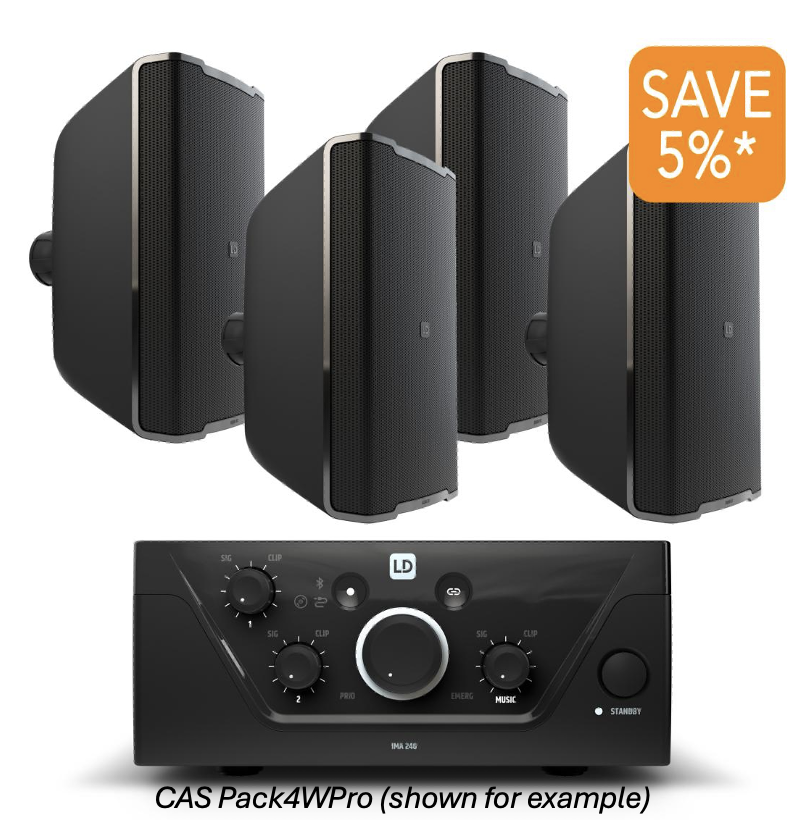
'Off the Shelf' Audio System Packages

Sometimes you just need quick and easy!
That's why we have put together a range of 'off the shelf' audio system packages. With 12 different packages to choose from, there should be one to suit your job. From a basic background music system in a waiting room with 4 ceiling speakers and an amplifier with built in bluetooth, up to high performance multi-zone system with music streamer, these system packages make ordering and installing background music systems quick and easy. Plus you'll have the added bonus of saving 5% over ordering the individual components.
Why You Need An Impedance Meter...
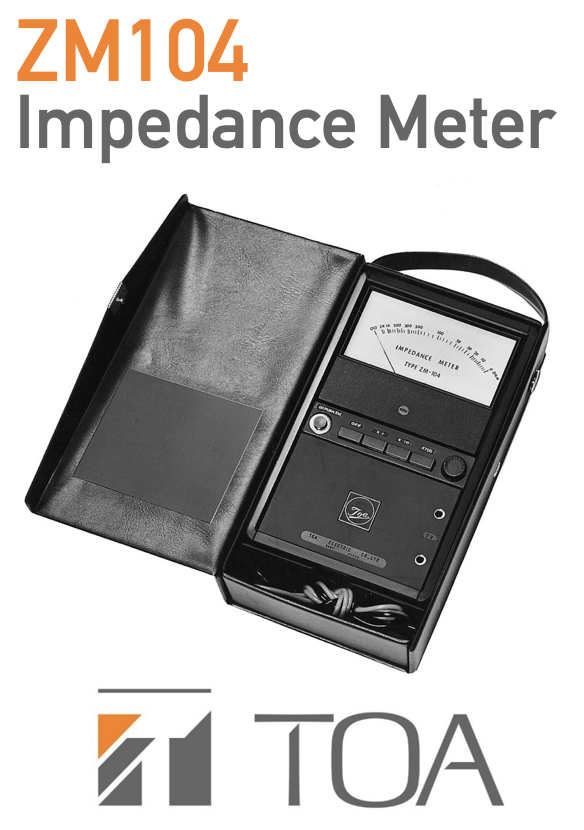
Click above for the product page
or watch our video below
for more information.
If you are installing constant voltage 100v line public address systems, then the impedance meter is an essential tool to ensure you do a professional job. It also saves time when testing existing loudspeaker circuits for shorts and overloads.
The TOA ZM-104A impedance meter is a stalwart of the industry and will give you accurate measurements for years to come.
Don't be tempted to use a simple multimeter to test 100v line circuits - it won't give the correct result. As this doesn't give a sinusoidal output, the reading will merely show a measurement of the DC resistance of the cable and primaries of the 100v transformers in the loudspeakers and not the impedance/load.

Installation Tips -
Speaker Impedance & Power
You may be an experienced commercial audio installer with a pretty good idea of what will work and what will not. Sometimes however, we need to be more precise or be able to prove our designs. Luckily, there are a couple of formulae that help us do just that.
100 Volt Line
100V Line speakers make installation easy – daisy chain them and add up the wattage of all the speakers and that’s the amplifier size you need. (We’d normally add about 25% for a little extra headroom)

What if we need to fault find a speaker line or know the wattage of a circuit when we don’t know how many speakers there are or what they are tapped at. Using an impedance meter (not a multi-meter), measure the speaker circuit and use the resulting measurement in the formula below:
10,000 ÷ Impedance (Z) = Total Power (P)
Alternatively, if you know the speaker wattage you can use this formula to check the measured impedance is correct:
10,000 ÷ Total Power (P) = Impedance (Z)
Low Impedance
Calculating the impedance of low impedance speakers depends on whether they are connected in series or parallel.
If speakers are connected in SERIES: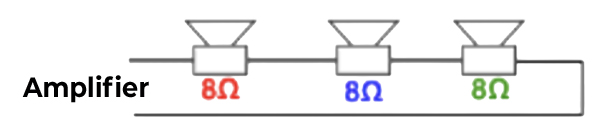 The calculation is simply:
Impedance = SPK1 + SPK2 + SPK3
In this case: 8Ω + 8Ω + 8Ω = 24Ω
If the speakers are connected in PARALLEL: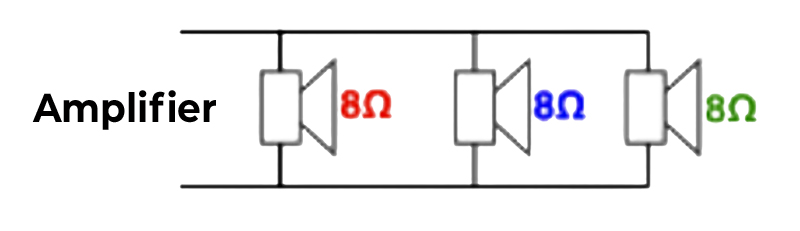 Calculating the impedance required a slightly different formula:
Impedance = 1 ÷ (1 ÷ SPK1) + (1 ÷ SPK2) + (1 ÷ SPK3)
In this example: 1 ÷ (1 ÷ 8) + (1 ÷ 8) + (1 ÷ 8) = 2.66Ω
However, there is a shortcut: If in PARALLEL & all speakers are the same, take the separate impedance and divide it by the quantity:
3 x 8 Ω speakers in parallel: 8Ω ÷ 3 = 2.66Ω
If you're unsure whether to use 100V Line or Low Impedance for your project, click here to have a read of our blog post on the subject.
Induction Loop Assistive Listening Explained
Most hearing aids have a switch or automatic sensor that allows them to pick up the electromagnetic field generated by an induction loop assistive hearing system. The hearing aid converts this signal into a sound suited to its user’s hearing requirements, cutting through background noise to allow them to participate more comfortably and effectively in general conversation, order goods or services, and listen to public performances, etc.
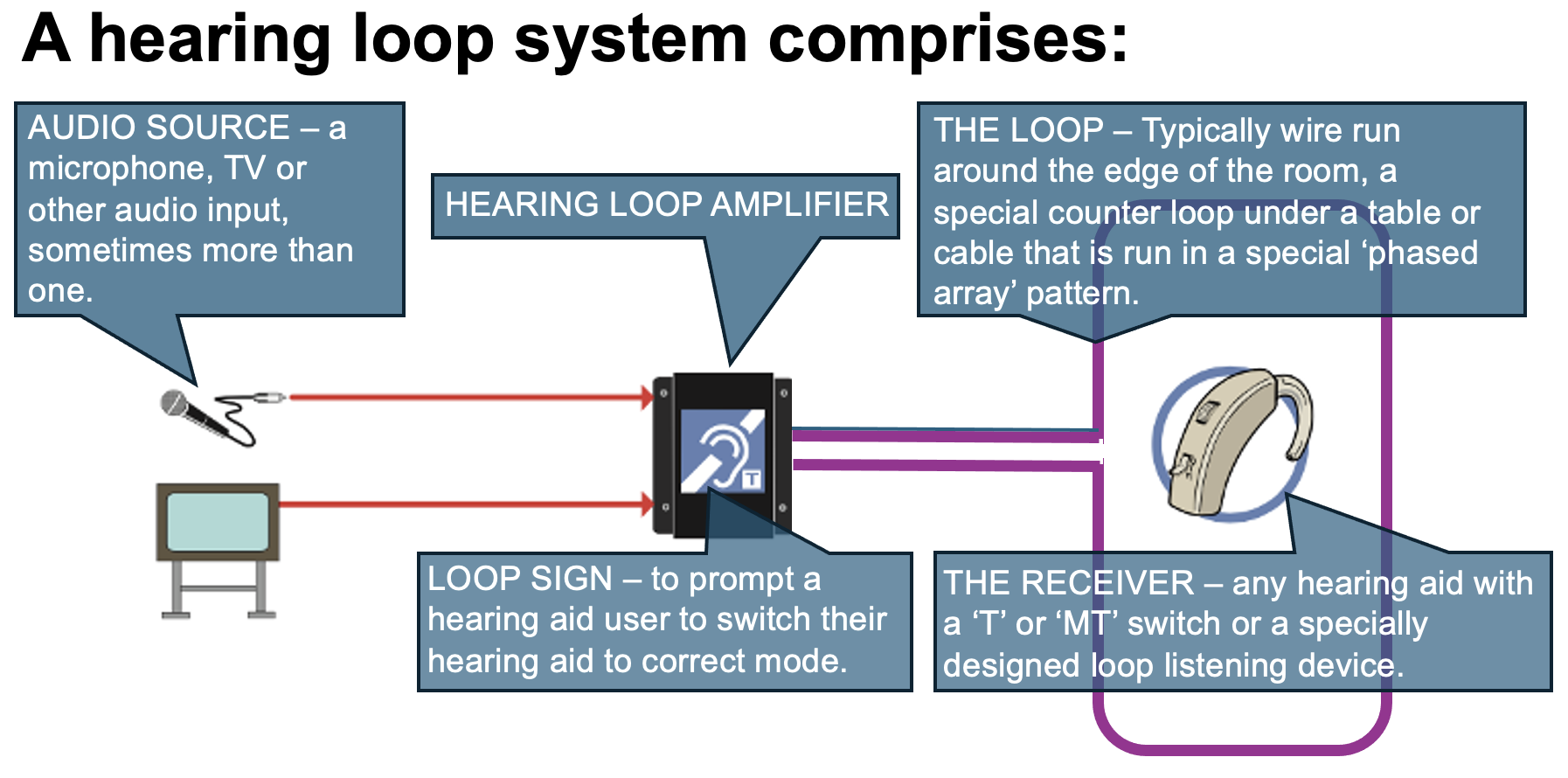
Hearing loop systems (also known as audio-frequency induction loop systems or AFILS) do not use radio frequencies. Instead they operate at audio frequencies where the signal from an audio source is fed into a hearing loop amplifier, which amplifies and sets the signal level in the same way as a conventional amplifier.
The amplified signal, instead of going to a loudspeaker, is fed to a closed loop of cable placed in or around the room using a constant current amplifier.
The current flowing through the loop generates a magnetic field that radiates in the space around the loop cable. Any lines of magnetic flux that pass through a hearing aid's telecoil will generate a current in the coil that is then converted back to audio and fed into the listener’s ear.
It is important to note the magnetic field will ‘bleed’ outside the perimeter of the loop, so a loop system cannot be considered confidential. Ways of reducing overspill can be discussed with our team, should you have a particular project.
A simple loop tester device is available for staff to periodically check that the hearing loop system is working properly.
Commercial Audio Rack Building,
System Design & Support
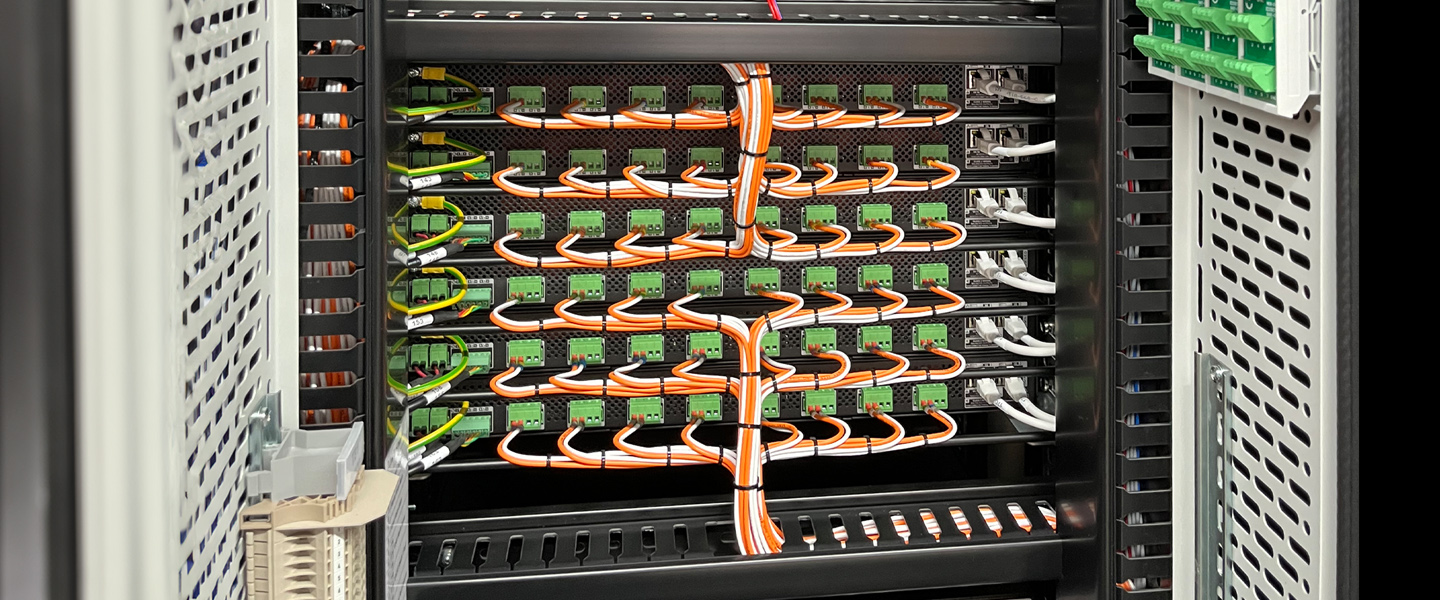
In addition to full commercial audio system design and technical support, we also offer a rack building service for our trade customers.
Once the design spec has been agreed, the rack is fully assembled, wired, configured & labelled before testing all system components for power & signal connectivity. The completed equipment rack is then shipped by pallet or specialist courier, or collected in person from our warehouse. Once in position, all you need to do is test your loudspeaker lines for load & connect them to the rack along with any remote audio inputs, saving you huge amounts of time on site.
Click here to see some rack build examples and case studies in our Tech Hub.
For more information about our rack building service, or anything else we can help you with, our Commercial Audio experts would be delighted to hear from you. Give them a call on 01663 767888 or email sales@commercialaudiosolutions.com

